了
了
par. used after a verb or an adj to indicate the completion of an action, or the end of a sentence for a change of situation

| 80% | 120% |
Register to get less ads.
Registration is free and once you are registered you use this word in your private vocabulary lists.
Then you can train your own vocabulary either here or using one of our applications for PC, iOS or Android.
Registration is free and once you are registered you use this word in your private vocabulary lists.
Then you can train your own vocabulary either here or using one of our applications for PC, iOS or Android.
Other meanings
| v. understand, know clearly |
 |
| v. (used in conjunction with de5 or bu4, after a verb) can |
|
| v./adv. to end, to conclude; (lit.) (not...) at all |
|
'了' is part of the following simplified words:
了 亨 哼 烹 疗 辽 钌
了 亨 哼 烹 疗 辽 钌
'了' is part of the following traditional words:
了 亨 哼 烹 釕
了 亨 哼 烹 釕


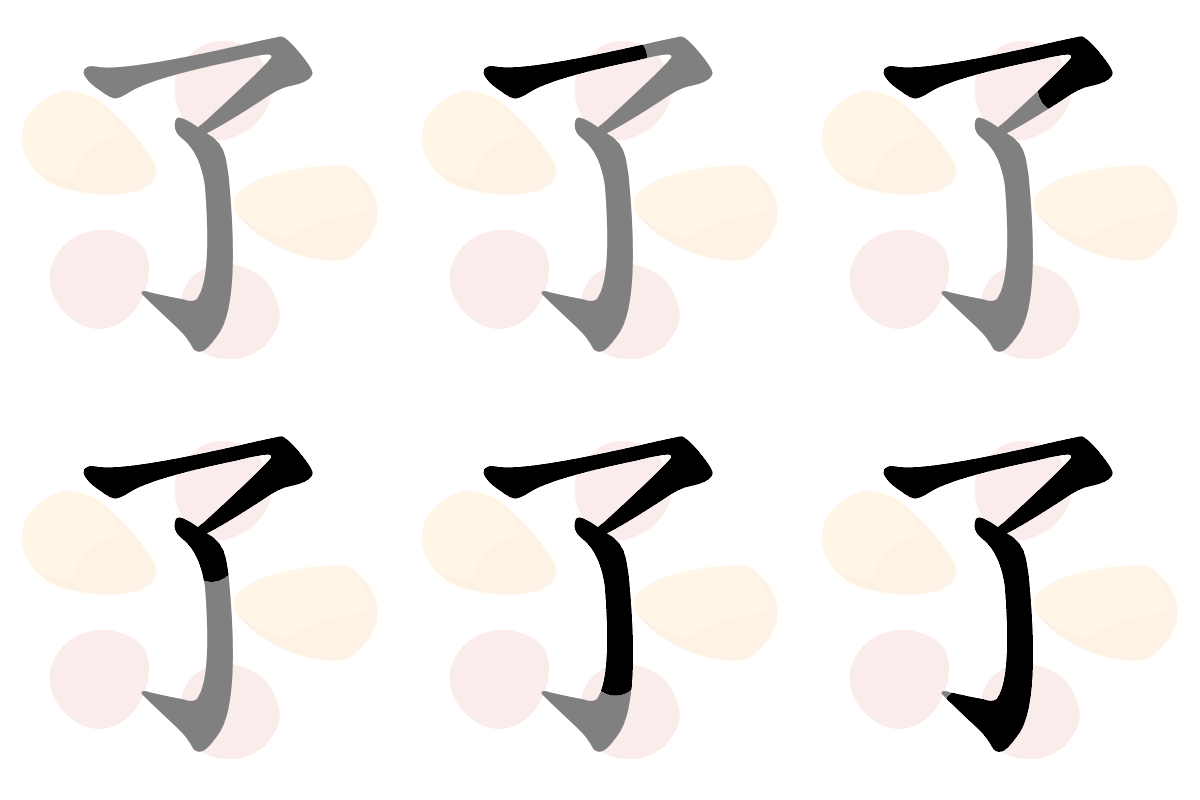 |
Simplified stroke orders are based on the 'Standard of National Commonly-used Mandarin Chinese Characters (现代汉语通用字笔顺规范)', issued by the China National Language and Character Working Committee (国家语言文字工作委员会) on April 7th 1997. Traditional stroke orders are based on information issued by the Taiwan Ministry of Education.
我 我 phr. I have got a cold. |
我 我 phr. I'm full. |
我 我 phr. My foot has gone numb from standing (for so long). |
啊 啊 phr. Ah, it's raining! |
他 他 phr. He bought a pair of shoes. |
我 我 phr. I have gone to China. |
你 你 phr. You have put on some weight. |
他 他 phr. He was beaten. |
我 我 phr. I have finished eating. |
她 她 phr. She fell in love with him. |
我 我 phr. I will enter the airport very soon. |
你 你 phr. Are you hungry? |
你 你 phr. You took the wrong one. |